You found a routine online. It looked perfect — six days a week, two hours per session, exercises you've never heard of. You tried it Monday, maybe Tuesday. By Thursday, you skipped. By the following week you were scrolling for a new plan.
The problem wasn't motivation. It was the routine.
Most workout plans fail because they're built for someone else's schedule and recovery. A good routine isn't the most "optimal" on paper — it's the one you'll repeat every week. Build for consistency first. Then optimize.
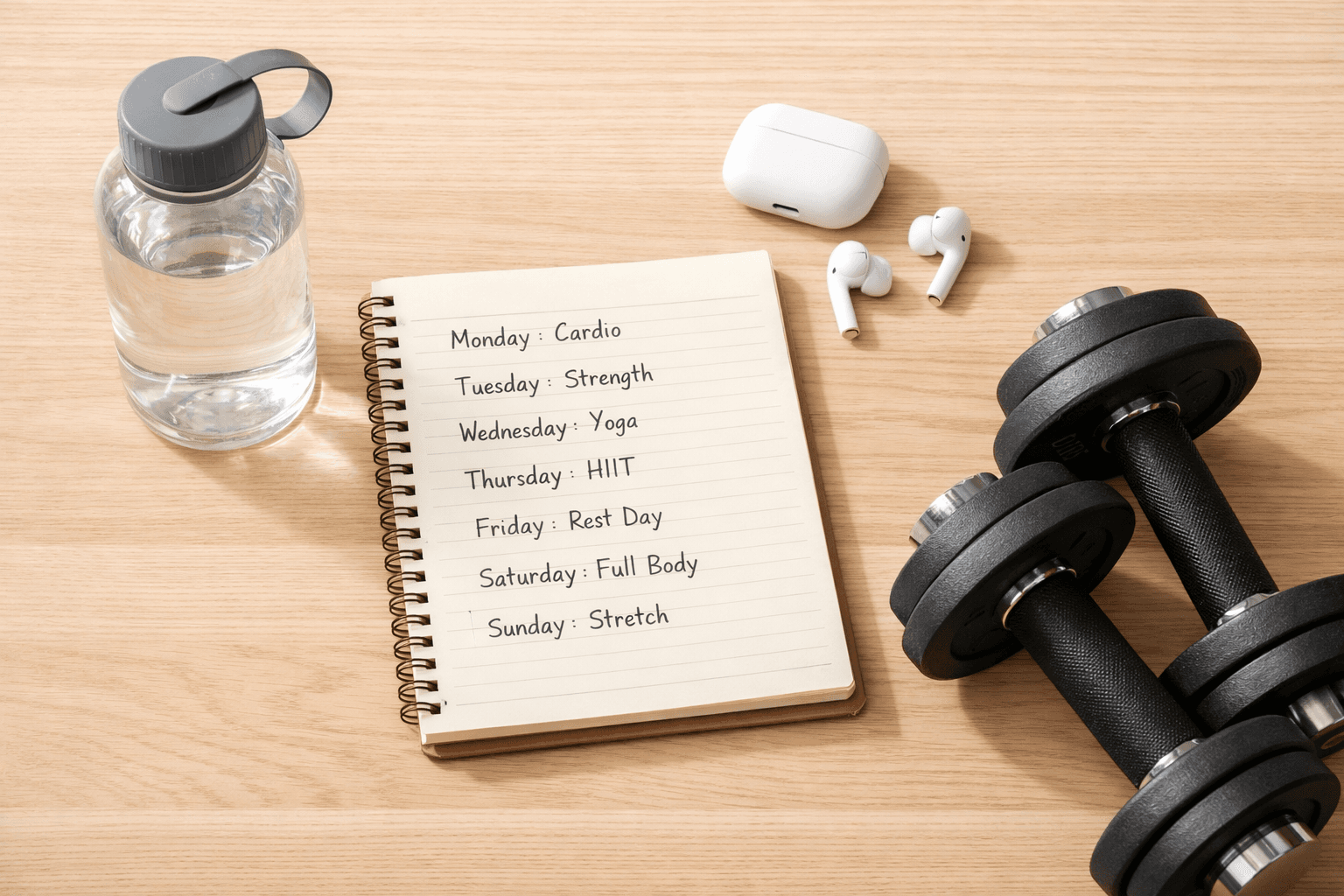
Pick Your Days (Be Honest)
Not how many days you wish you trained. How many you'll actually show up.
3 days/week — Best for beginners. Full-body sessions or push/pull/legs.
4 days/week — Upper/lower split. Good middle ground.
5-6 days/week — Only if you've been consistent for 6+ months.
A three-day routine you follow every week will always outperform a six-day routine you abandon after two weeks. Start conservative. You can always add a day later.
Keep Your Exercises Simple
You don't need 12 exercises per session. You need 4-6, chosen well.
Each session, pick from these categories:
A compound push — bench press, overhead press, push-up
A compound pull — row, pull-up, cable row
A knee-dominant leg movement — squat, lunge, leg press
A hip hinge — deadlift, Romanian deadlift, hip thrust
1-2 accessories — curls, lateral raises, leg curls
Core work — plank, leg raise, dead bug
Compound movements work multiple muscle groups at once — more results in less time. Don't chase novelty. Squats, presses, rows, and deadlifts have worked for decades.
For sets and reps:
Heavy compounds (squat, bench, deadlift, row): 3 sets of 5-8 reps, 2-3 min rest
Everything else: 3 sets of 8-12 reps, 60-90 sec rest
Add weight when you can hit all reps with good form — that's progressive overload, the principle that actually drives results.
The Three Things That Kill Routines
Doing too much too soon. Going from zero to five gym days is a shock your schedule won't absorb. Earn day four by showing up consistently for day three.
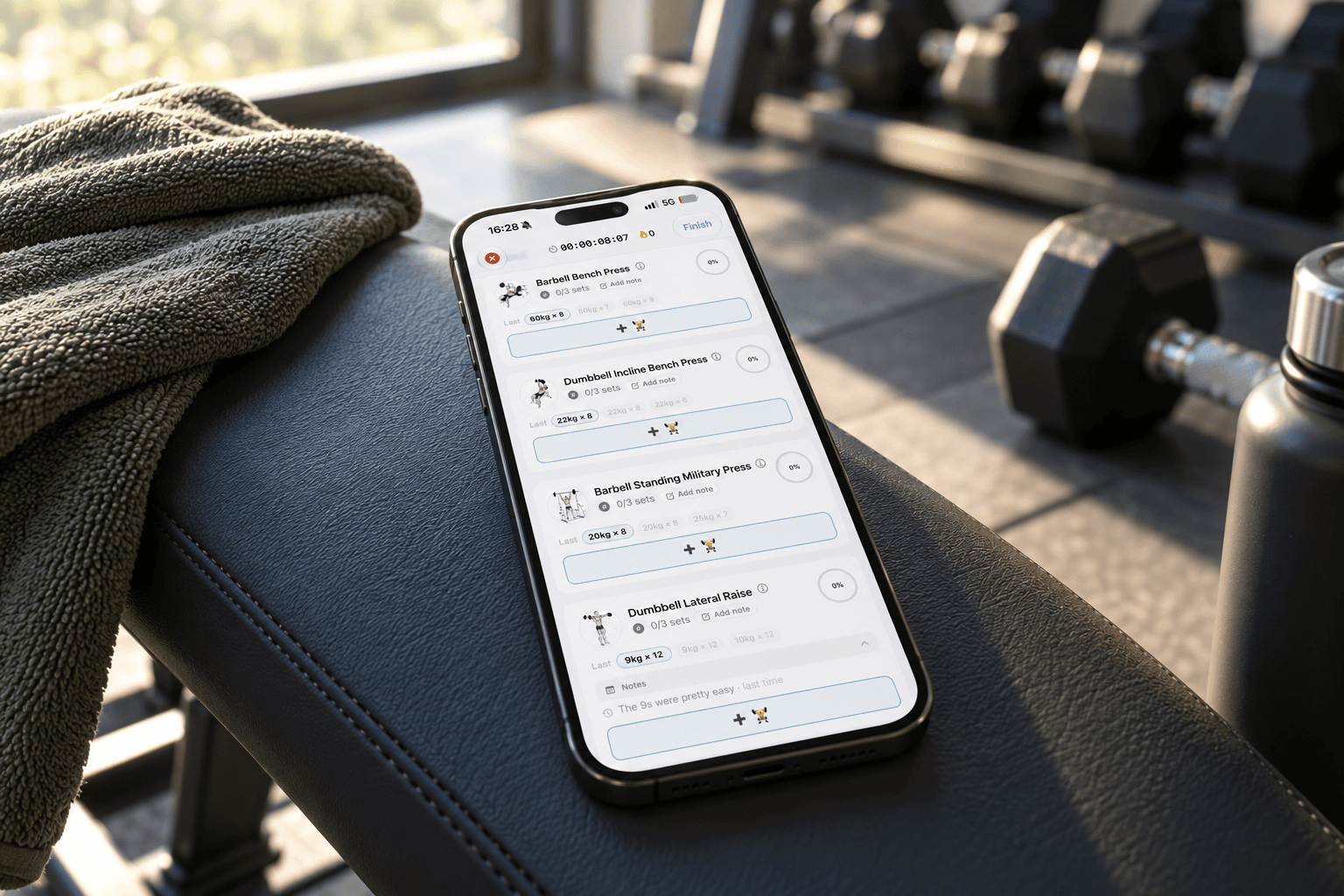
Not tracking. If you can't remember what weight you used last week, you can't progress. Track every session — it takes 10 seconds and it's the difference between exercising and training.
Program hopping. No routine works in two weeks. Commit to one for at least 6 weeks before evaluating. Results come from consistency, not from finding the "perfect" plan.
Skip the Planning — Start With a Proven Routine
If building your own routine feels overwhelming, skip it. Pick the one that matches your situation:
Have a barbell and 3 days? → Starting Strength
No gym, no equipment? → The Bodyweight Trifecta
Only 7 minutes? → 7 Minute Body Blast
Glute and lower-body focus? → Building Glutes & Beyond
All four are built into Ellim, ready to start today:
Routine: Starting Strength | Days/Week: 3 | Equipment: Barbell + rack | Focus: Foundational strength
Routine: The Bodyweight Trifecta | Days/Week: 3 | Equipment: None | Focus: Push/pull/legs at home
Routine: 7 Minute Body Blast | Days/Week: Any | Equipment: Chair | Focus: Full-body circuit
Routine: Building Glutes & Beyond | Days/Week: 3 | Equipment: Minimal | Focus: Glutes + lower body
Starting Strength — 3 days/week barbell beginner plan. Squat every session, alternate bench and overhead press, and deadlift. Simple, trackable, progressive. One of the most proven beginner strength programs ever.
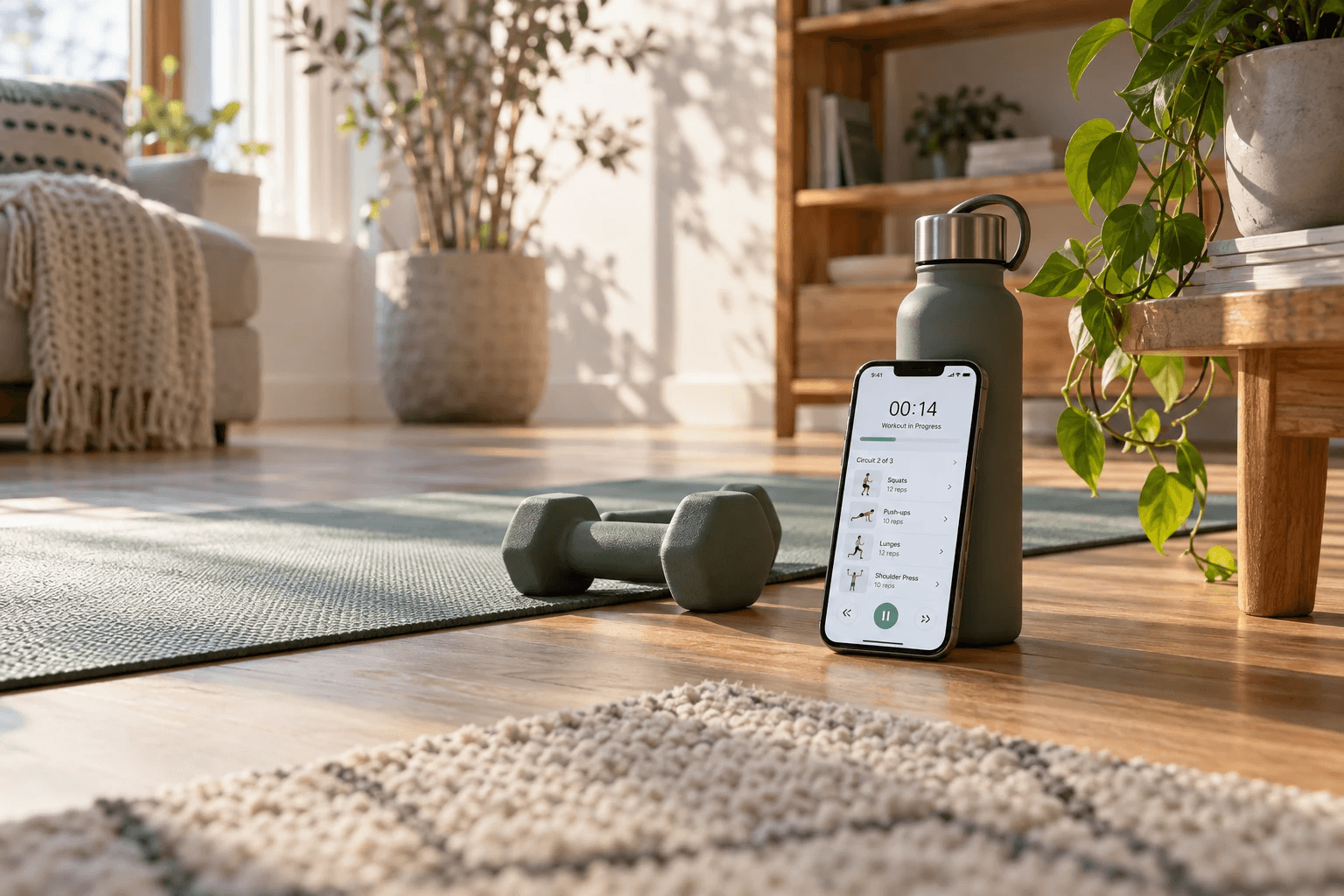
7 Minute Body Blast — No gym? No time? A full-body bodyweight circuit done in 7 minutes. Push-ups, squats, planks, lunges. Perfect for building the habit before committing to longer sessions.
The Bodyweight Trifecta — A 3-day push/pull/legs split using zero equipment. Train anywhere — your living room, a park, a hotel room.
Building Glutes & Beyond — Based on Bret Contreras' Strong Curves. 3 days/week, glute and lower-body focused, balanced with upper body work. Hip thrusts, squats, Romanian deadlifts, rows, and presses.
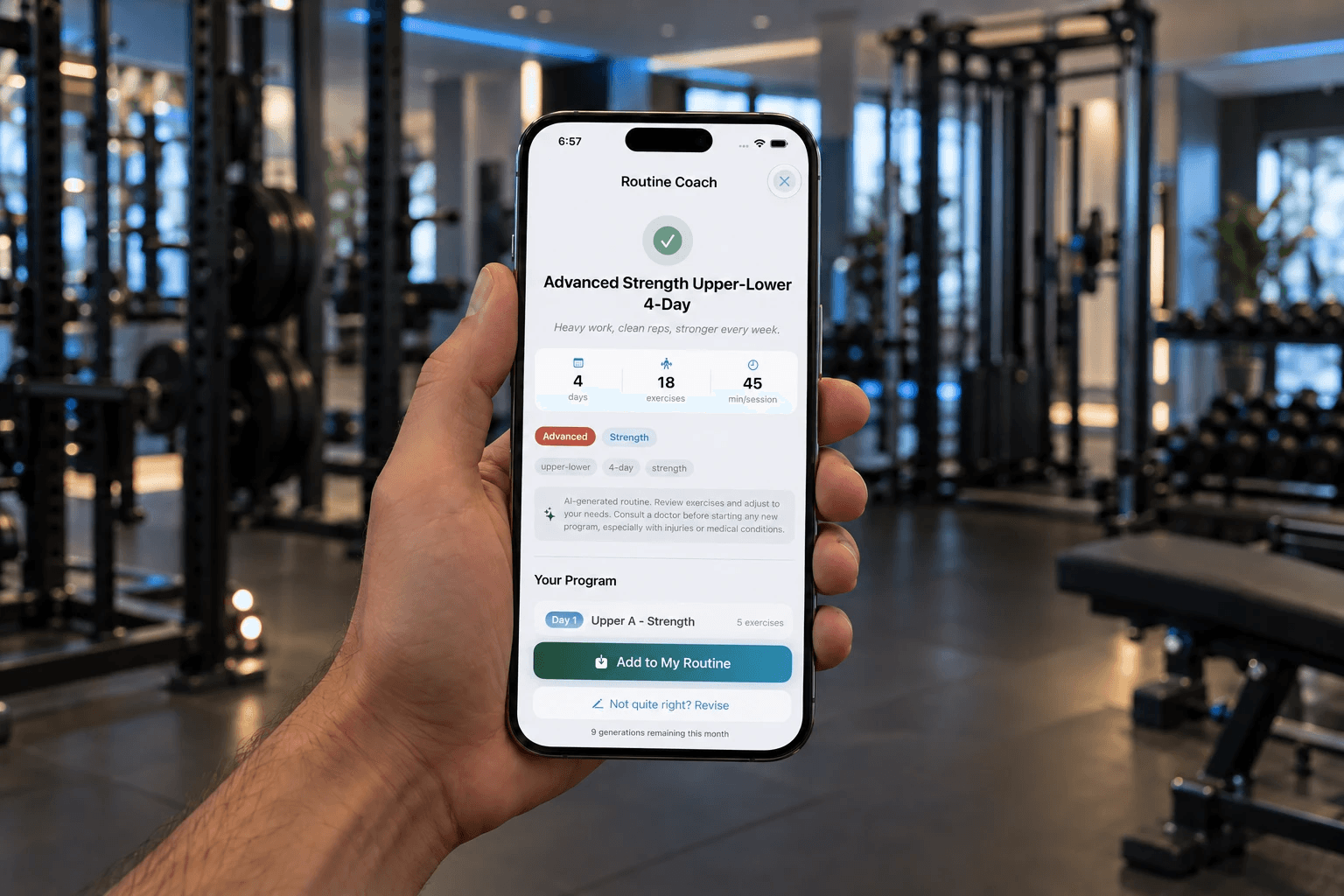
Or tell Ellim what you want. Smart Session lets you describe your goal — "30-minute upper body workout with dumbbells" or "leg day, no squats, I have a knee issue" — and builds a complete workout on the spot. No browsing, no guessing. Just say what you need and start lifting.
Pick one. Follow it for 4-6 weeks. Track every session.
Frequently Asked Questions
How long should a beginner workout be?
30-45 minutes is plenty. If you're picking 4-6 exercises at 3 sets each with proper rest, you'll be done in that window. Longer sessions don't mean better results — consistency and intensity do.
Is 3 days a week enough to build muscle?
Yes. Three full-body sessions per week hits each muscle group three times — which research shows is effective for hypertrophy, especially in beginners. You don't need more until three days stops producing results.
How fast should I add weight?
As a beginner, you can often add 2.5-5 kg (5-10 lbs) per session on compound lifts for the first few months. When that stalls, switch to adding reps first, then weight — this is called double progression. If you want the full breakdown, read our progressive overload guide.
The Bottom Line
A routine that works fits your real schedule, uses 4-6 exercises per session, separates compounds from accessories, includes progressive overload, and gets tracked. Don't overthink it — pick your days, pick your exercises, show up, and track everything. And make sure you're eating enough protein to support the work — here's how much you actually need.
The hardest part isn't the exercises — it's remembering what you did last time. Ellim tracks every set, rep, and weight so you always know where you left off. Pick a routine from the library or build your own, and let the app handle the rest.