Most ab advice is garbage. Do 100 crunches. Hold a plank for 5 minutes. Buy the ab gadget you saw on Instagram and pretend this time it'll be different.
But one of the most cited ab studies did something better: it actually measured muscle activity during common exercises and compared them head-to-head. The result was a ranking based on EMG data, not gym folklore.
The Study Everyone Still Quotes
The American Council on Exercise (ACE) sponsored a study at the San Diego State University Biomechanics Lab that tested 13 common ab exercises. Researchers measured 30 healthy adults using electromyography (EMG) to compare how much muscle activity each movement produced relative to a standard crunch.
A quick caveat: EMG is useful for comparing how demanding exercises are in the moment, but it's not a direct measure of long-term muscle growth by itself. Higher EMG doesn't automatically mean "best for hypertrophy forever." It does, however, give us a much better starting point than random opinions online.
The Rankings: Rectus Abdominis
Here were the top performers for the rectus abdominis in the study:
Bicycle Maneuver — 248%
Captain's Chair — 212%
Exercise Ball Crunch — 139%
Vertical Leg Crunch — 129%
Torso Track — 127%
The bicycle maneuver produced nearly 2.5 times the rectus abdominis activity of a traditional crunch in this test. Captain's chair came in second, while the exercise ball crunch was the highest-ranked option among the equipment-based movements.
The Rankings: Obliques
For the obliques, the top five looked different:
Captain's Chair — 310%
Bicycle Maneuver — 290%
Reverse Crunch — 240%
Hover — 230%
Vertical Leg Crunch — 216%
That matters because the best "ab exercise" depends on what you're targeting. If you want a movement that lights up both the front of the abs and the obliques, bicycle crunches and captain's chair raises were the standouts in this study.
What Actually Underperformed
The traditional crunch was the baseline. It wasn't useless — it just wasn't the best use of your time compared with several better-performing variations.
Some ab devices also underwhelmed. The Ab Roller was only slightly above the traditional crunch, while the Ab Rocker performed dramatically worse. That doesn't mean every piece of equipment is bad — in the same study, the exercise ball crunch ranked very well, and the Torso Track placed fifth for rectus abdominis. The takeaway isn't "machines are trash." It's that some tools help, some don't, and marketing usually exaggerates the difference.
Why the Top Exercises Tend to Work Well
The better-ranked movements generally shared one or both of these qualities: they forced the trunk to stabilize hard, or they added rotation or a strong posterior pelvic curl.
That helps explain why bicycle crunches, captain's chair raises, reverse crunches, and vertical leg crunches all did well. They ask more from the trunk than a basic crunch done through a short, familiar range.
One interesting note from the same study: the researchers did not find convincing support for the idea that most people can cleanly isolate "upper abs" versus "lower abs." So if someone is selling you a magical lower-ab move, be skeptical.
A Practical Routine Built From the Research
The exercises below are inspired by the top performers from the study, plus a couple of well-supported additions for a complete session. Not all of these were in the original ACE ranking — where they weren't, we've noted why they're included.
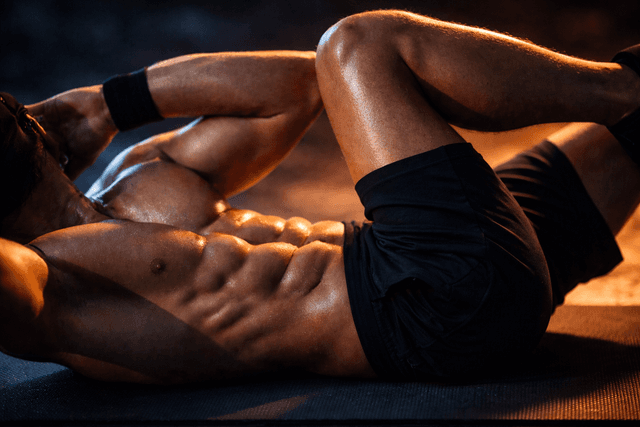
1. Bicycle Crunch — 3 x 12–20 per side
The top performer for rectus abdominis in the study. Move slowly — the twist and control are the point. Don't rush it.
2. Captain's Chair Raise — 3 x 10–15
Top performer for obliques. Raise with your abs, not momentum. Curl your pelvis up at the top — hip flexors lift legs, abs curl your pelvis. If you need to swing, drop the reps.
3. Reverse Crunch — 3 x 10–15
Ranked well for obliques in the study. Bring the knees in, then lift the hips slightly. That second part is what makes it an ab movement instead of just a leg lift. Control the negative over 2 to 3 seconds.
4. Vertical Leg Crunch — 2–3 x 12–15
Appeared in the top five for both rectus abdominis and obliques. Keep the lower back controlled and focus on a clean trunk curl.
5. Cable Kneeling Crunch — 3 x 15
Not part of the original ACE study. Included because cable tension stays constant through the full range of motion, making it a strong practical addition. Hinge at the spine, not the hips — if your butt moves toward your heels, you're doing a hip hinge, not an ab crunch.
6. Front Plank — 2–3 x 20–45 seconds
The hover variation ranked 4th for obliques in the study. Treat it as a hard brace, not a lazy endurance test. A 30-second plank with maximum tension beats a 3-minute plank where you're hanging off your joints.
You don't need all six in the same workout. Pick three or four, train them well, and get better at them over time.
How to Program This
Frequency: 2 to 3 times per week at the end of your workout. Abs need recovery like any other muscle.
Rest: 30 to 60 seconds between sets.
Progression: Add reps first. Then slow the tempo. Then add load when the exercise allows it. The goal is to make them stronger, not to chase a burn.
The Part Nobody Wants to Hear
Ab training makes your abs stronger and more developed. It won't, by itself, make them visible.
Visible abs are mostly a body fat and overall body composition issue. Most men need to be below 12 to 15 percent body fat. Most women below 18 to 22 percent. No amount of bicycle crunches will overcome a caloric surplus.
Train your abs because they're a muscle worth training — for performance, posture, and trunk stability. Manage your nutrition if you want to see them.
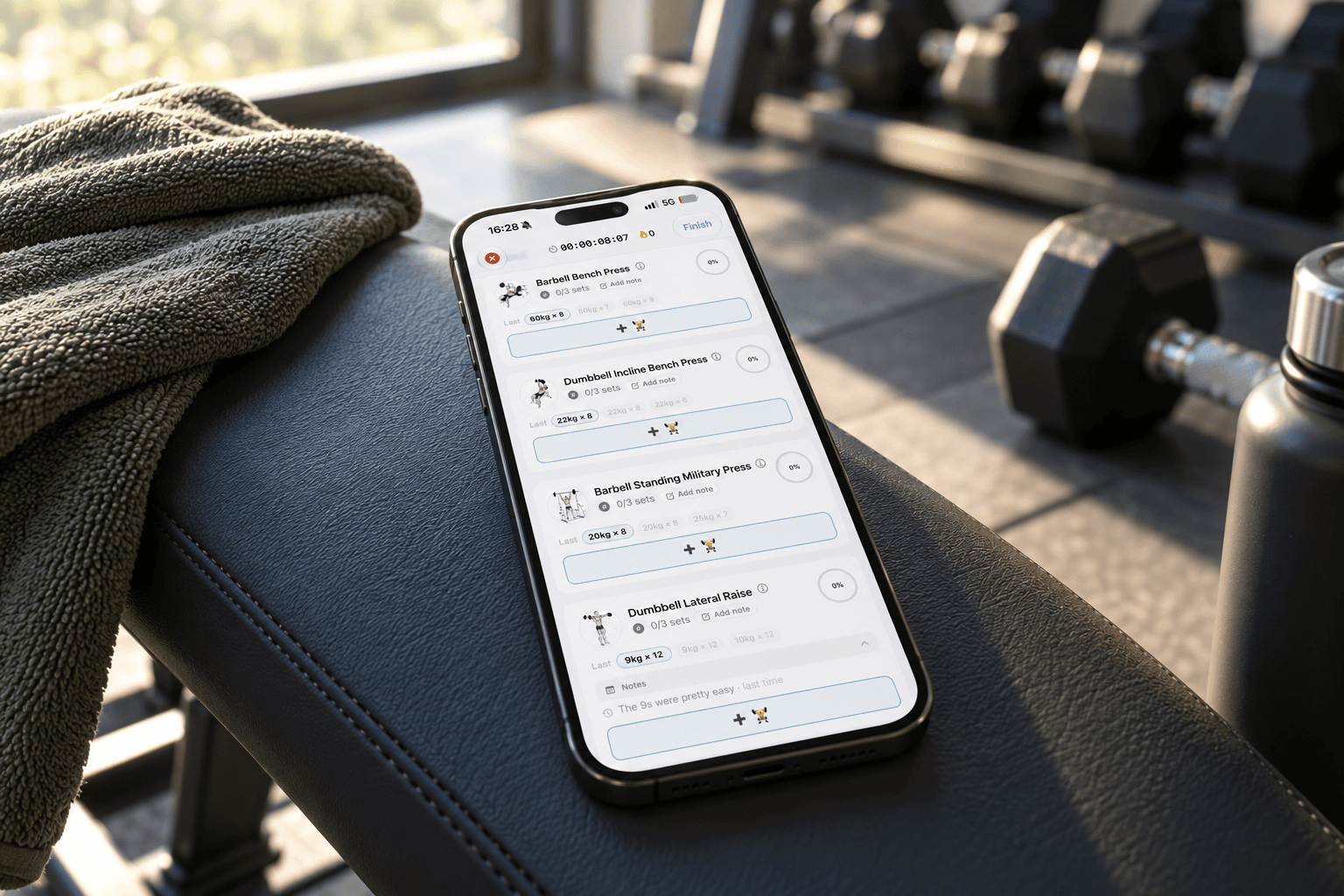
*We built a full ab routine inside Ellim inspired by the highest-performing movements in the research above. Download Ellim and find it in the routine library as "Abs Ranked by Science."*